A musical instrument has its own life. You only need to look at it carefully enough.
Some of the strongest visual ideas in poster design are not invented — they are discovered. The form of an instrument already contains another form. The task is to find it, and to present it with enough precision that the viewer sees both at once.
The Instrument That Comes Alive
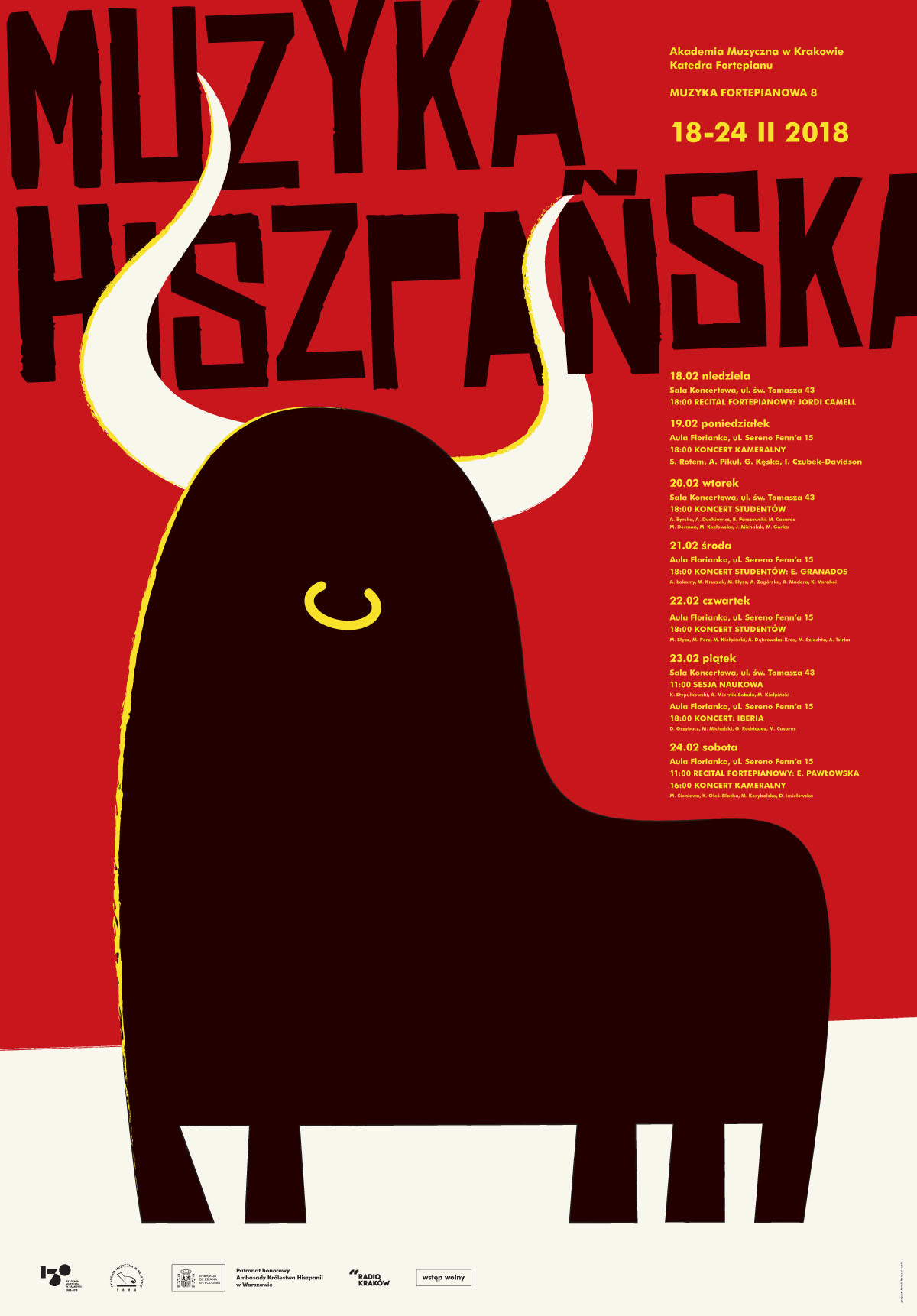
A piano has legs. It has a body. It has something like a head. One gesture — a pair of horns rising from the lid — and it becomes a bull. In the Muzyka Hiszpańska poster, the connection feels precise and inevitable: the black shape of a piano and the black shape of a bull are, in essence, the same form. There is no illustration of Spain here. There is a shape revealing its second meaning.
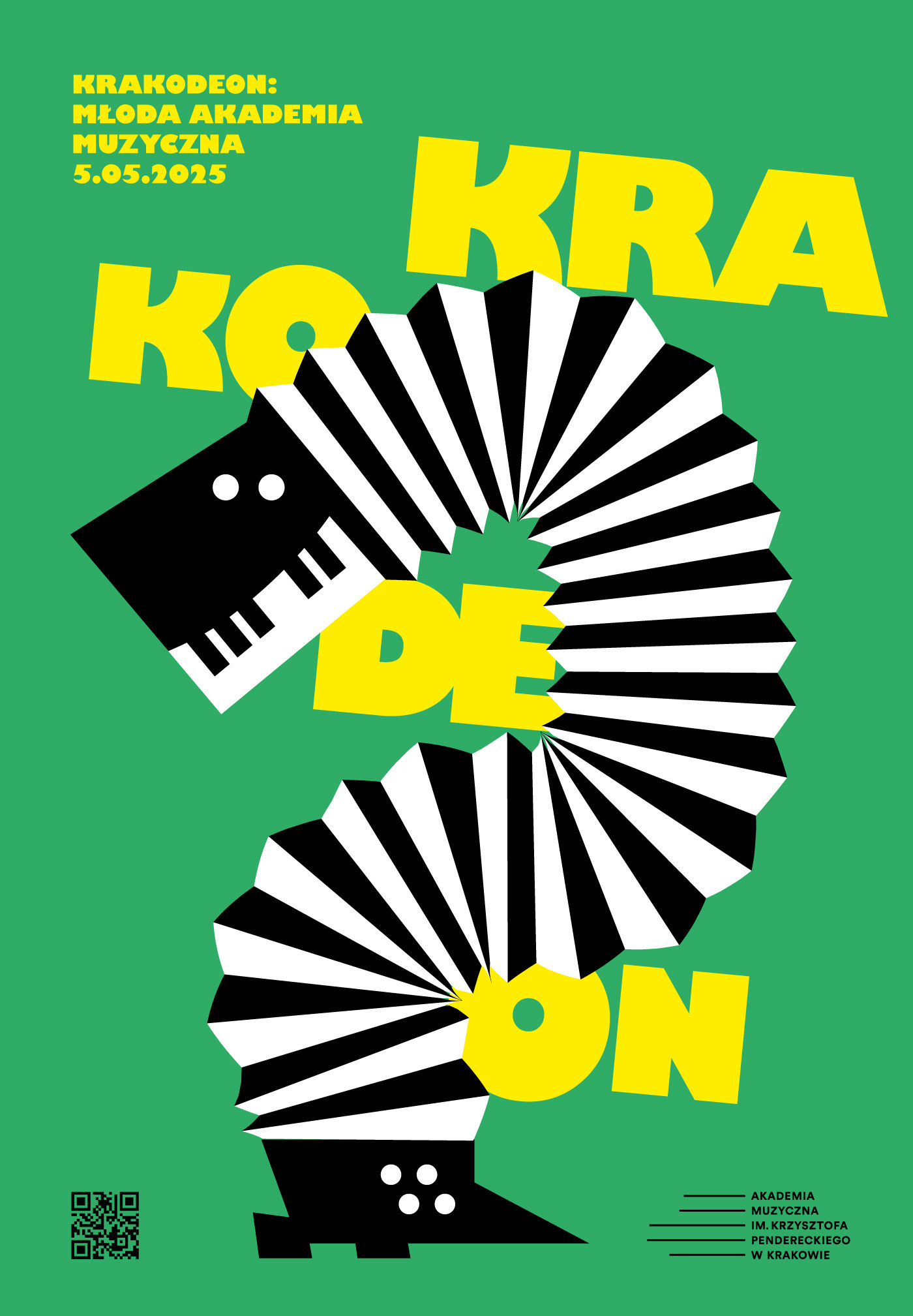
The accordion in the Krakodeon poster operates differently, but with equal force. The bellows open like a tail or mane, the keyboard becomes a snout, legs emerge below. The instrument is not decorated — it is transformed into a creature that might run off the stage at any moment.
In both cases, the hybrid is born from careful attention to the instrument itself. Not from fantasy — from observation.
The Creature That Carries Sound
A bird appears in these posters more than once — and each time differently. Not as a symbol of freedom, not as decoration, but as a carrier of the instrument.
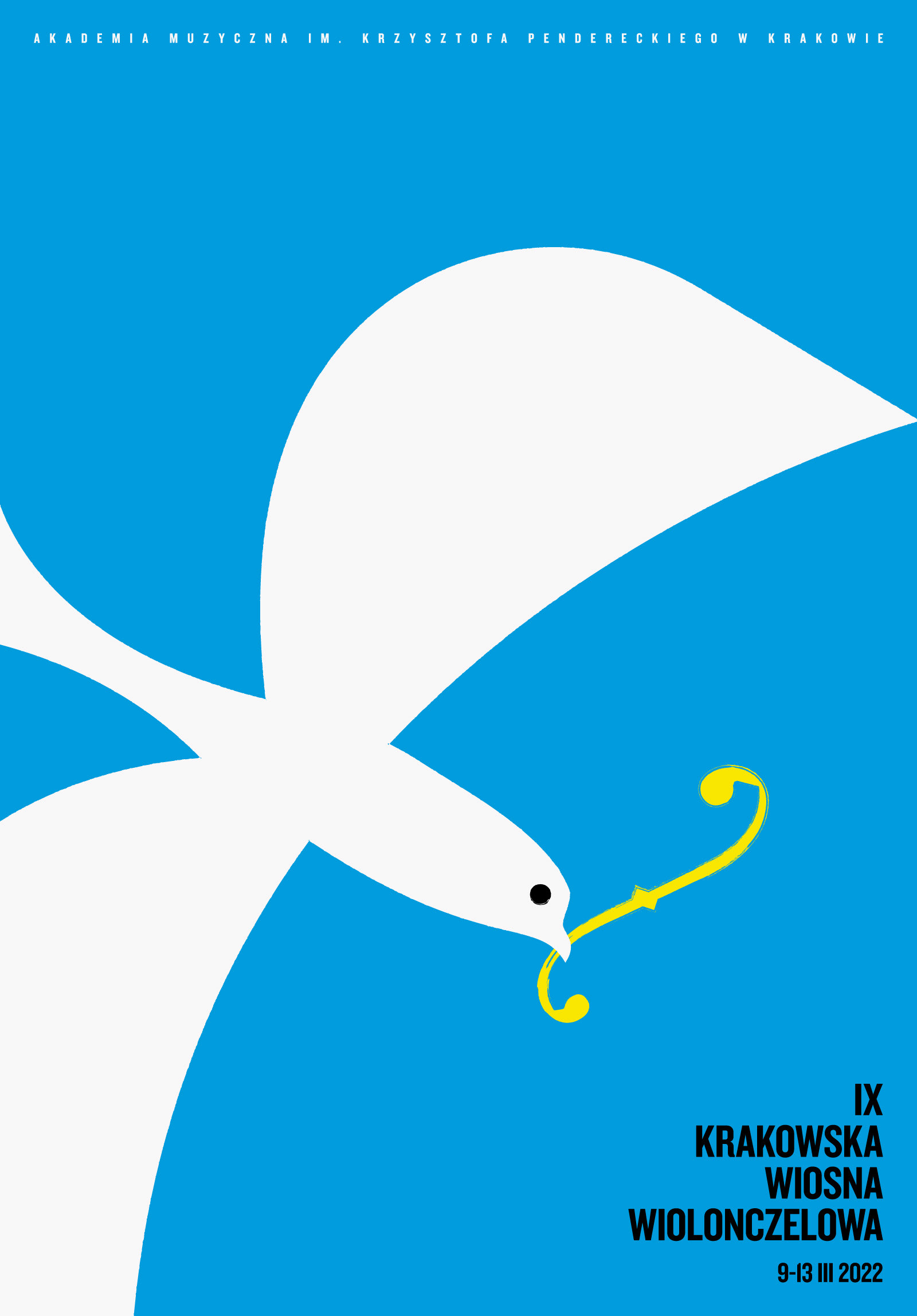
In the ninth edition of Krakowska Wiosna Wiolonczelowa, a white bird holds a yellow cello scroll in its beak. The gesture is simple and complete: the bird brings music, carrying it like something discovered — something worth returning with.
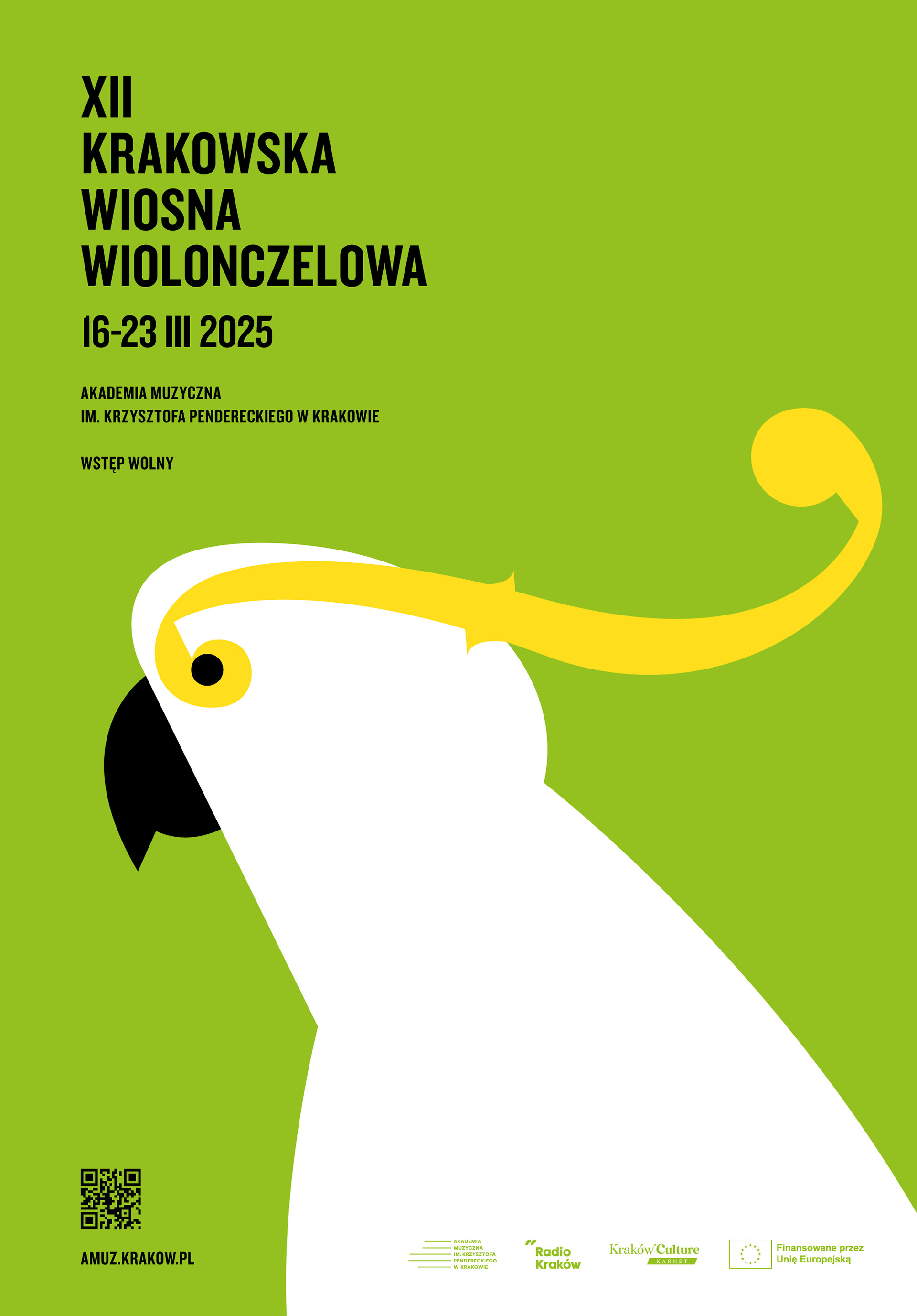
In the twelfth edition, the festival returns to the bird in another register. A cockatoo with a yellow crest — and the crest is a cello scroll. This time the instrument is not carried. It has become part of the body. The boundary between creature and music disappears entirely.
Form as Character
Some hybrids do not combine two recognizable things. They combine a shape with a presence. The form of the instrument becomes a character before the viewer realizes they are looking at an instrument.
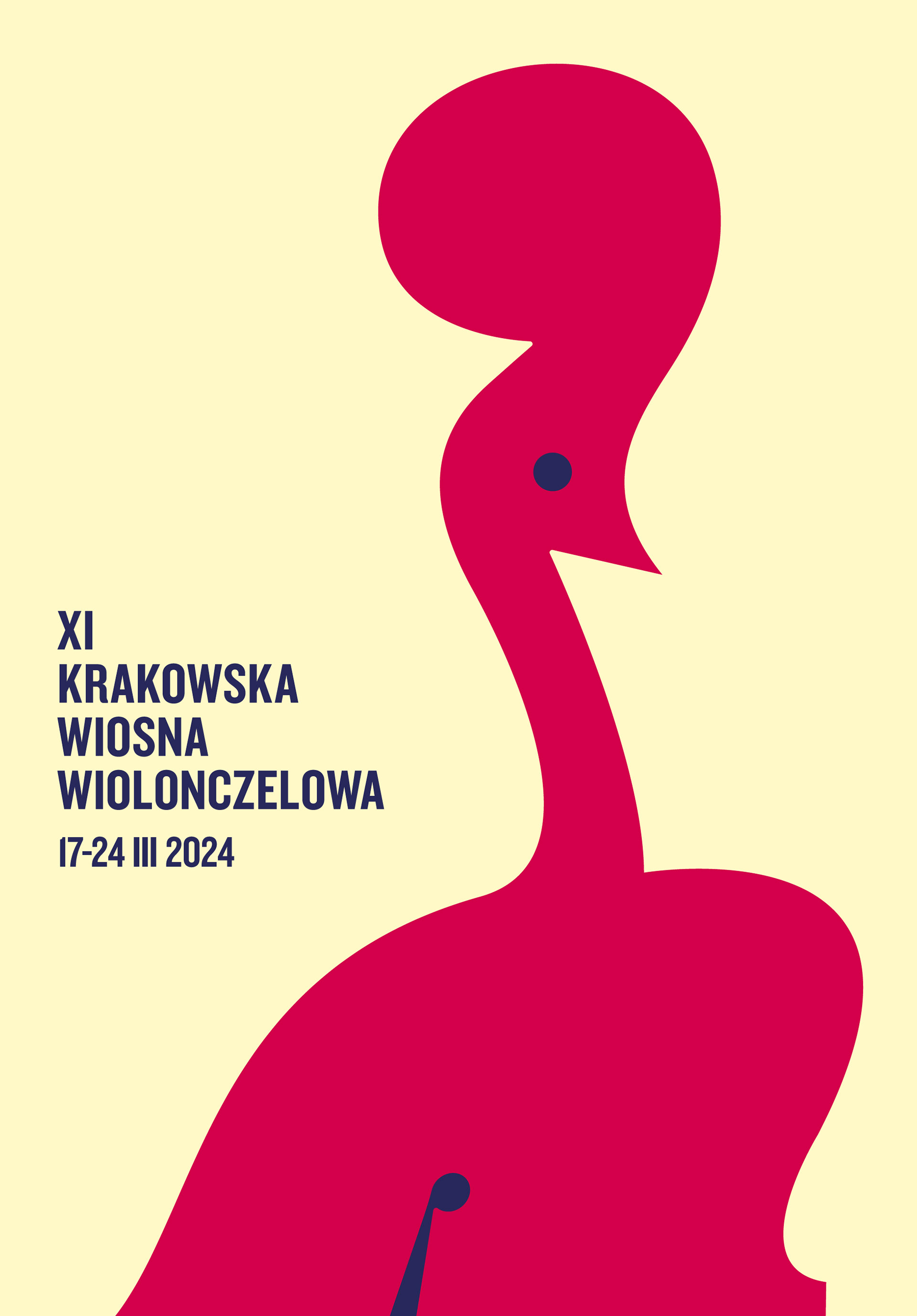
In the eleventh edition of Krakowska Wiosna Wiolonczelowa, a red mass fills almost the entire poster. The cello scroll rises like a bird’s head on a long neck; the resonance body becomes a torso. The instrument is a creature, but the creature is also an instrument. Neither identity dominates.
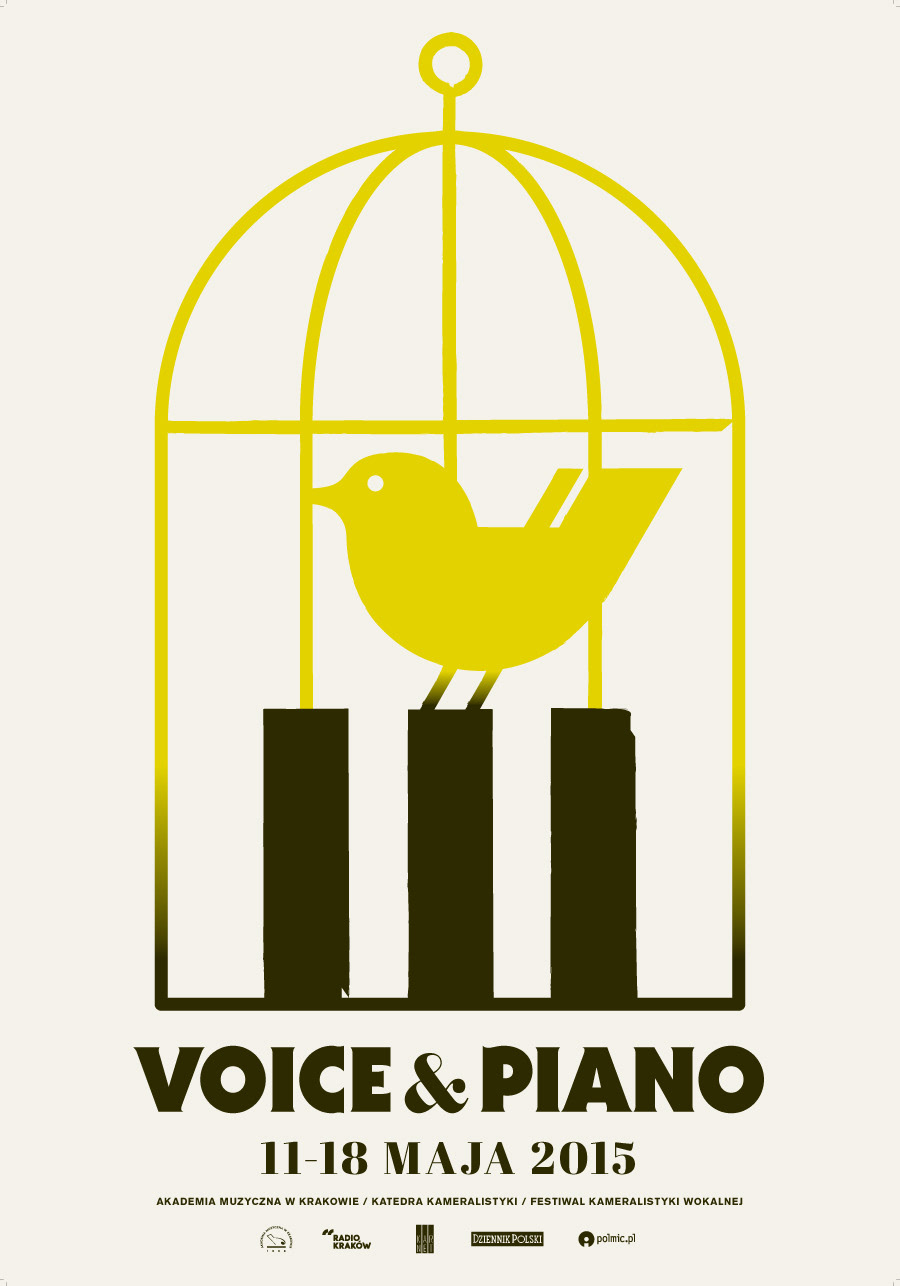
In the Voice & Piano poster, a yellow bird sits inside a cage whose bars are piano keys. A voice enclosed within an instrument — or an instrument functioning as a cage for the voice. The hybrid becomes a metaphor for the relationship between two kinds of music: the freedom of singing and the structure of the keyboard.
A hybrid is not created by combining forms. It is created through discovery — in the moment when two shapes reveal themselves as one. An instrument that becomes a creature does not change its nature. It reveals it.