A form works when nothing can be removed. Not simplicity as an aesthetic, but simplicity as discipline.
Reduction is not the same as emptiness. In music, a single note placed with precision carries more weight than a full chord played without intention. The same principle applies to visual form. These posters operate through the discipline of finding the minimum that still holds everything: the single shape containing two meanings, the one line that draws both instrument and player, the image complete before a word is read.
The Instrument as Sign
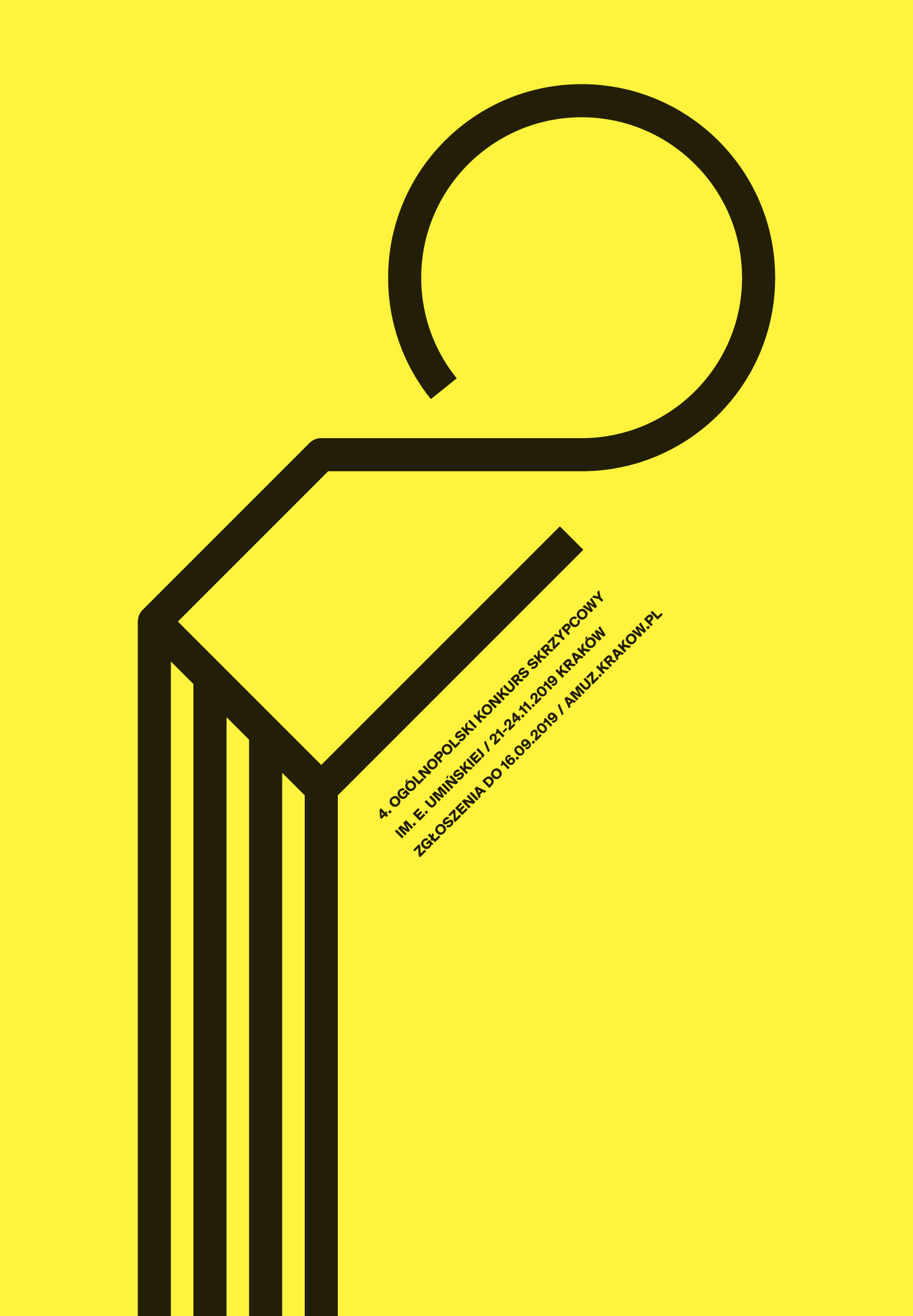
A violin has a silhouette: two curves at the sides, a narrowing at the waist, a long neck. Draw that contour in one unbroken line, and it becomes simultaneously an instrument and a human figure. In the Umińska Violin Competition poster, that line is exactly one — a gesture drawing violin and violinist at once. There is no illustration here. There is the discovery that these two shapes were always one.
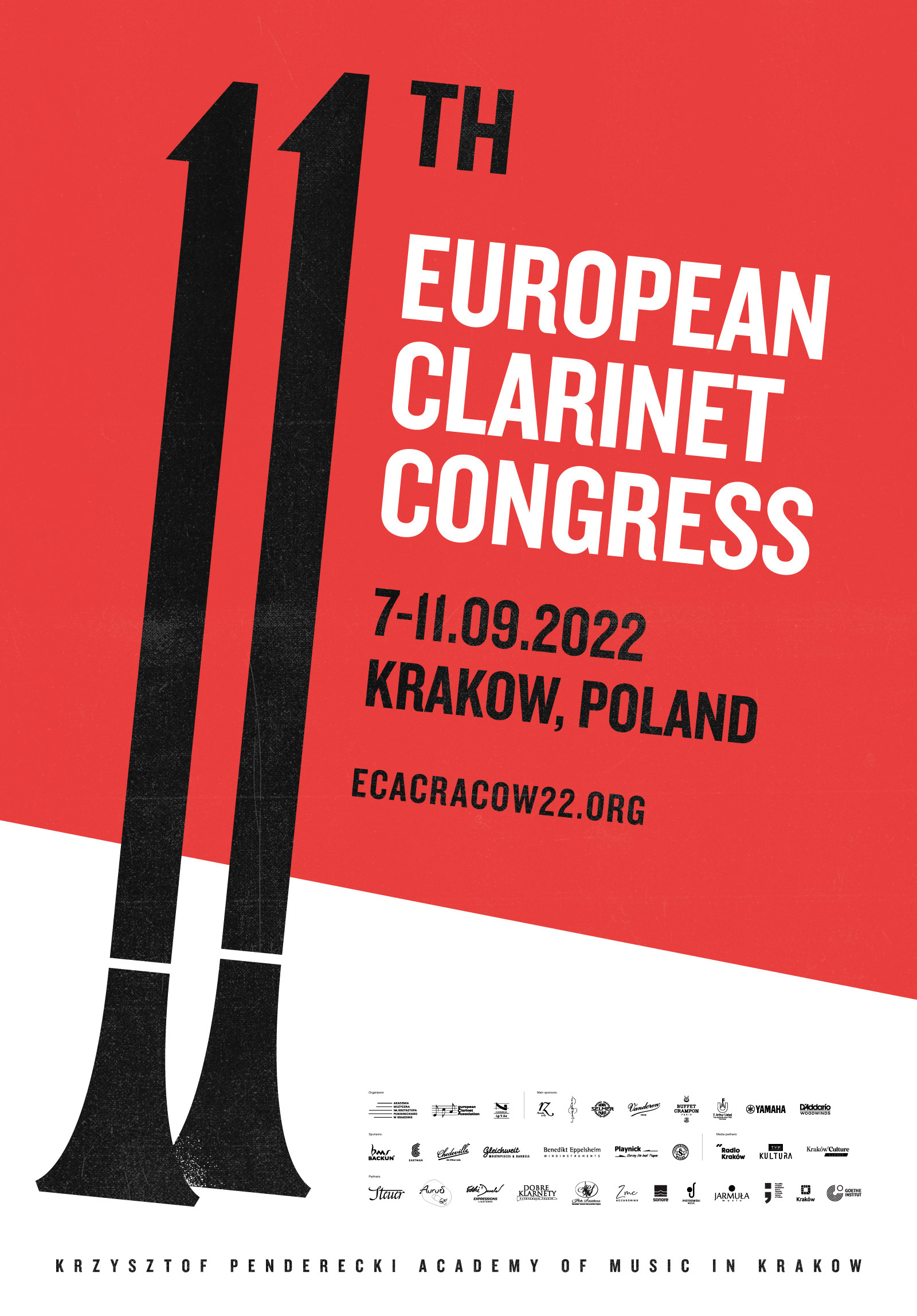
In the 11th European Clarinet Congress poster, two clarinets stand side by side — instruments, but also the number 11. The edition number and the form of the instrument meet so precisely that the image feels inevitable. It is not coincidence. It is method: let the subject speak its own form.
Form as Metaphor
Some posters open the form of an instrument toward a meaning not immediately expected — and once seen, impossible to unsee.
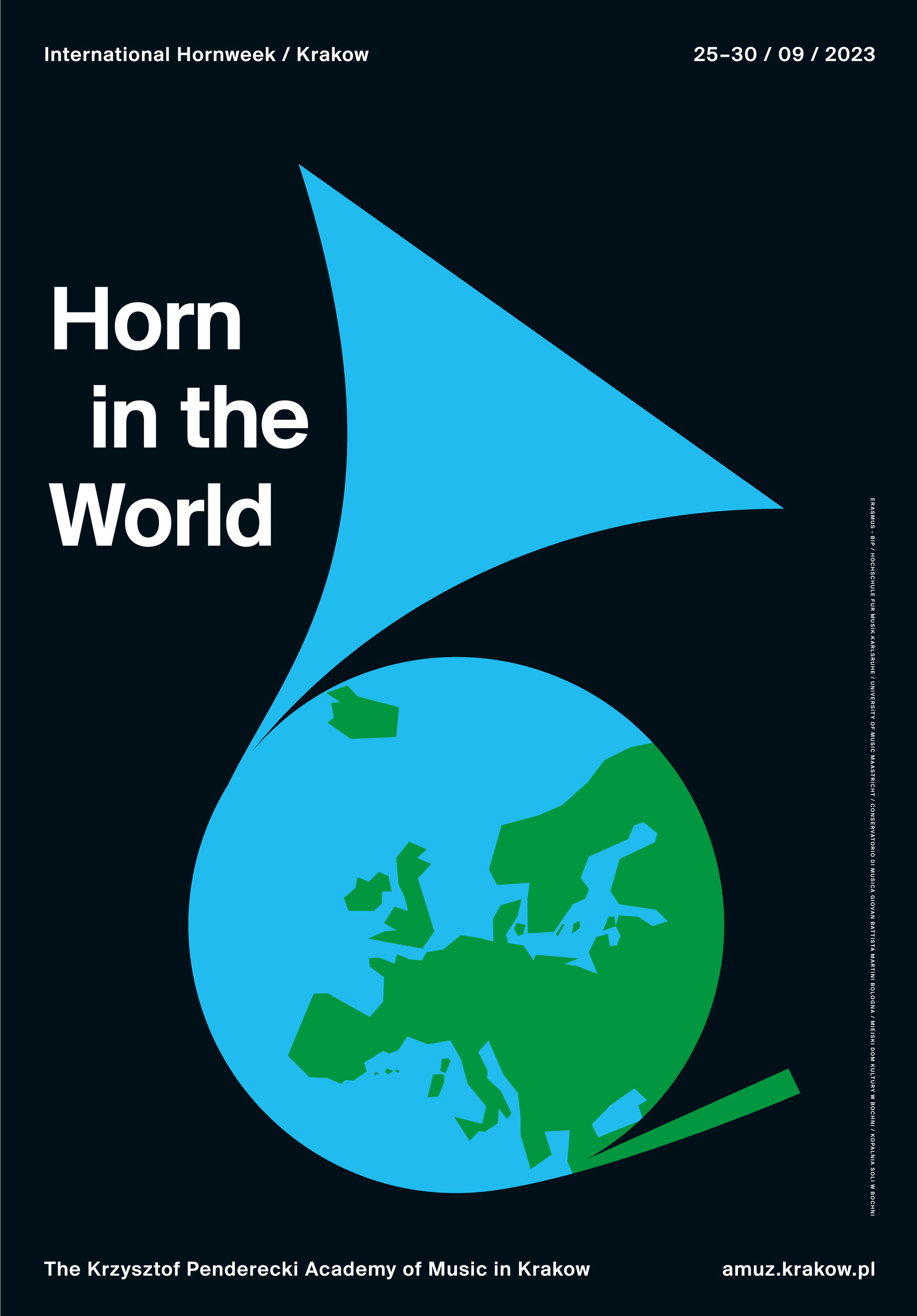
In the Hornweek poster, a French horn holds a globe inside its bell. The circular form of the bell and the circular form of the earth are the same shape. The instrument does not play music here — it contains the world. One gesture connects a local festival to the global reach of sound, without a word of explanation.
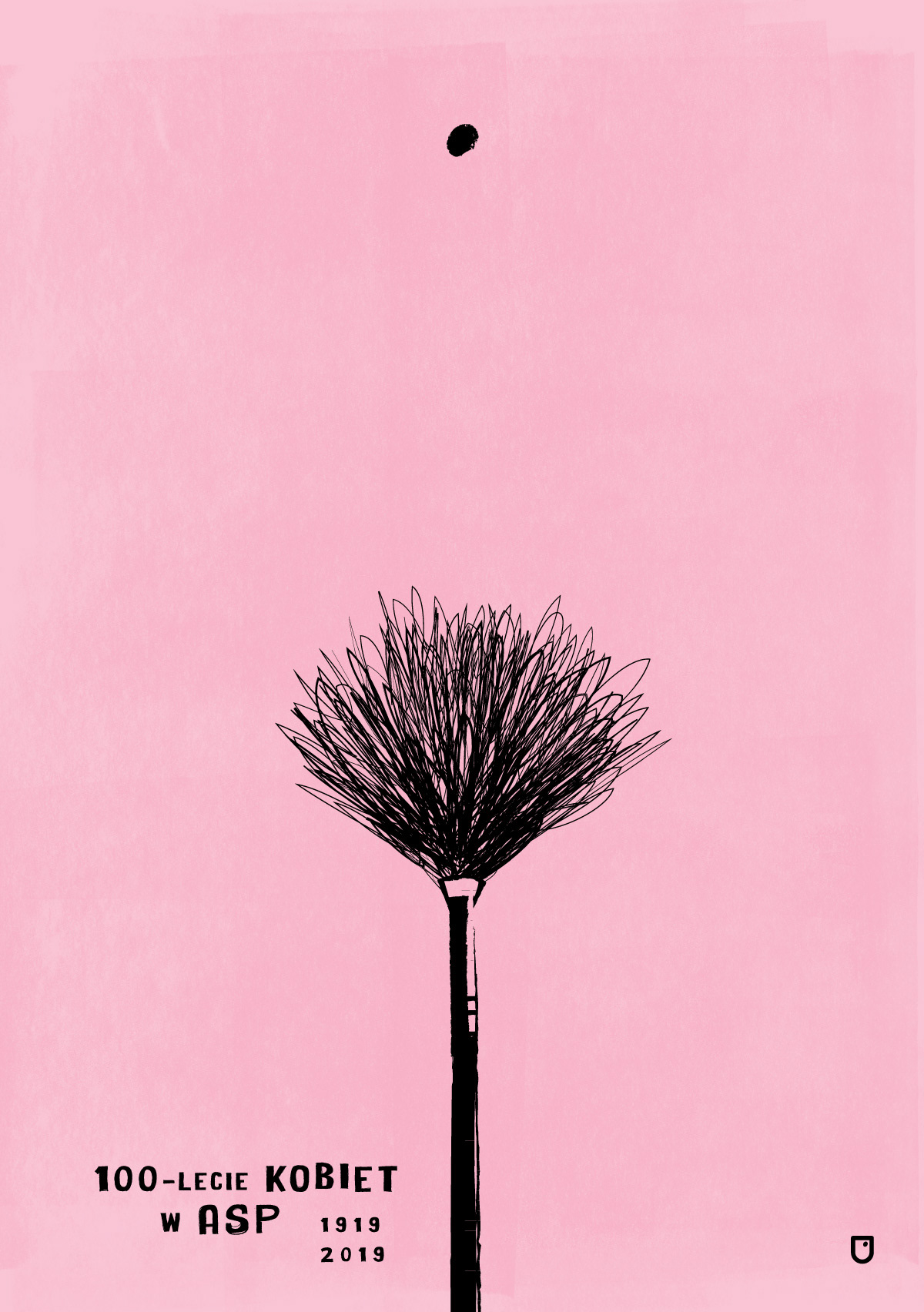
In the poster for the Centenary of Women at the Academy of Fine Arts, a paintbrush stands vertically against a pink field. Its bristles open like a womb; a single dot marks the center. The painter’s tool becomes her body. There is no illustration of femininity here — only a form that carries it quietly and completely.
Portrait Through Reduction
Sometimes form does not reach toward metaphor. It condenses. It takes what is already recognizable and reduces it to the exact minimum that still remains whole.
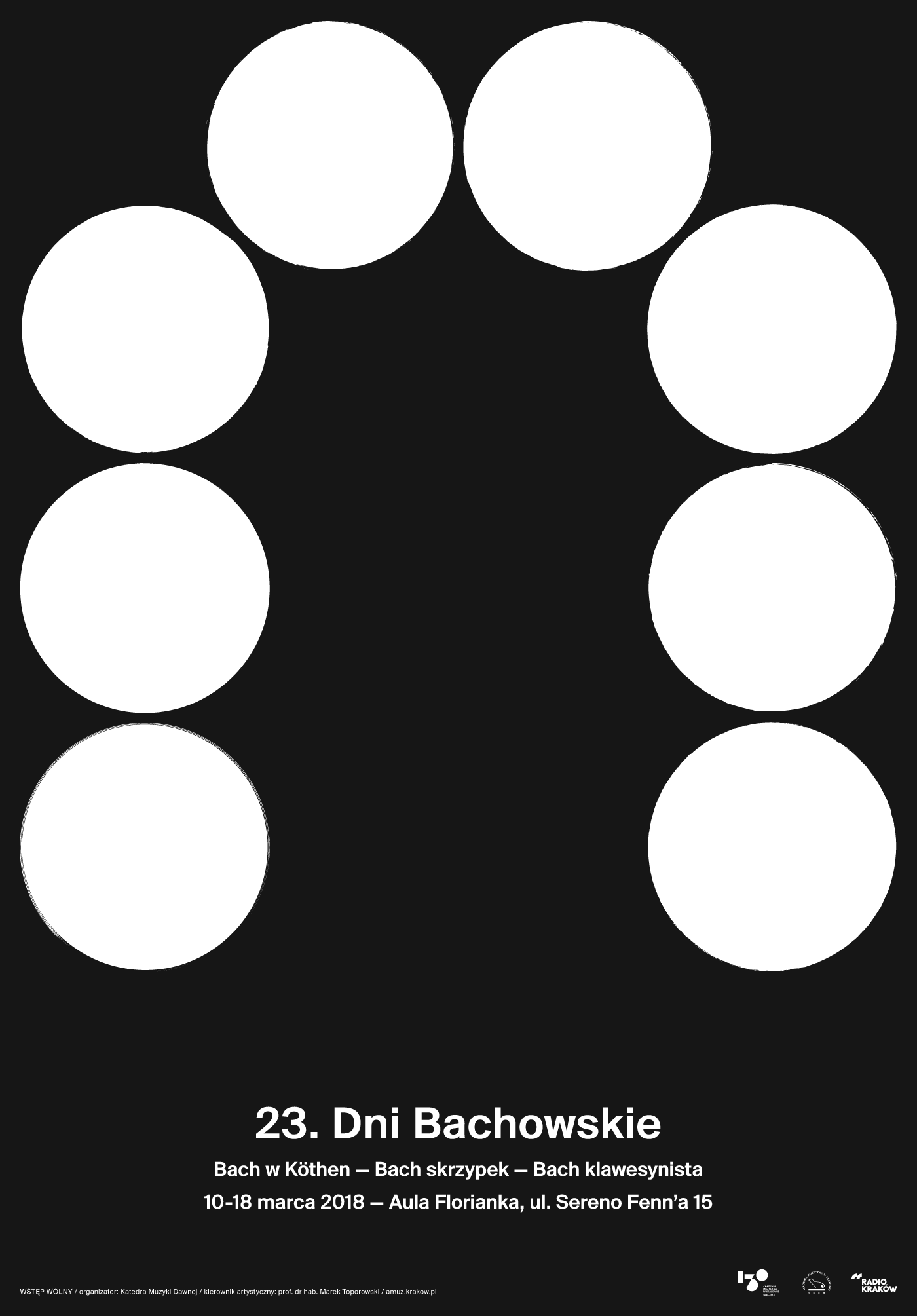
In the 23rd Bach Days poster, eight white circles arrange themselves in an arc against black. This is Bach’s wig — not drawn, but constructed through rhythm. Each circle is simultaneously a curl and a note, an element of portrait and pattern. The viewer recognizes Bach before having time to ask why — which is precisely the point.
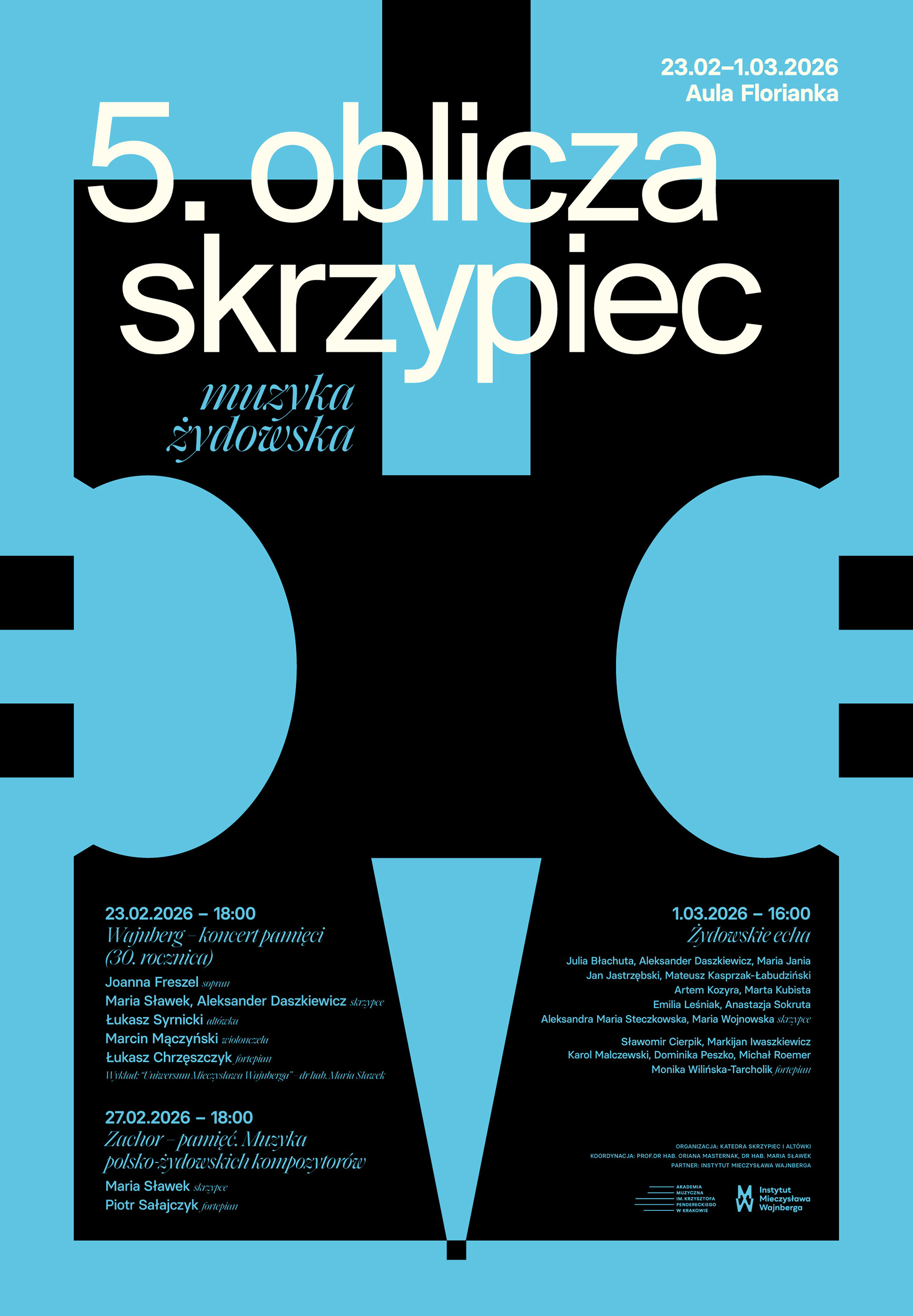
In the Oblicza Skrzypiec poster, the violin emerges from darkness as a mass assembled from geometric figures. The instrument is not drawn — it is built. The form breaks apart and reassembles itself, and the viewer participates in that reconstruction. Recognition becomes an experience rather than a given.
A form is complete not when it contains everything, but when it contains exactly what is needed. One shape. One discovery. One sentence without words.