A figure in a music poster is not a portrait. It does not document appearance. It carries meaning.
The human form appears in these posters across many years and many different contexts — as a composer’s silhouette, an opera character, a musician at the instrument. In each case, the figure serves the same purpose: to give the event a body. To make music visible through presence.
The Figure as Sign
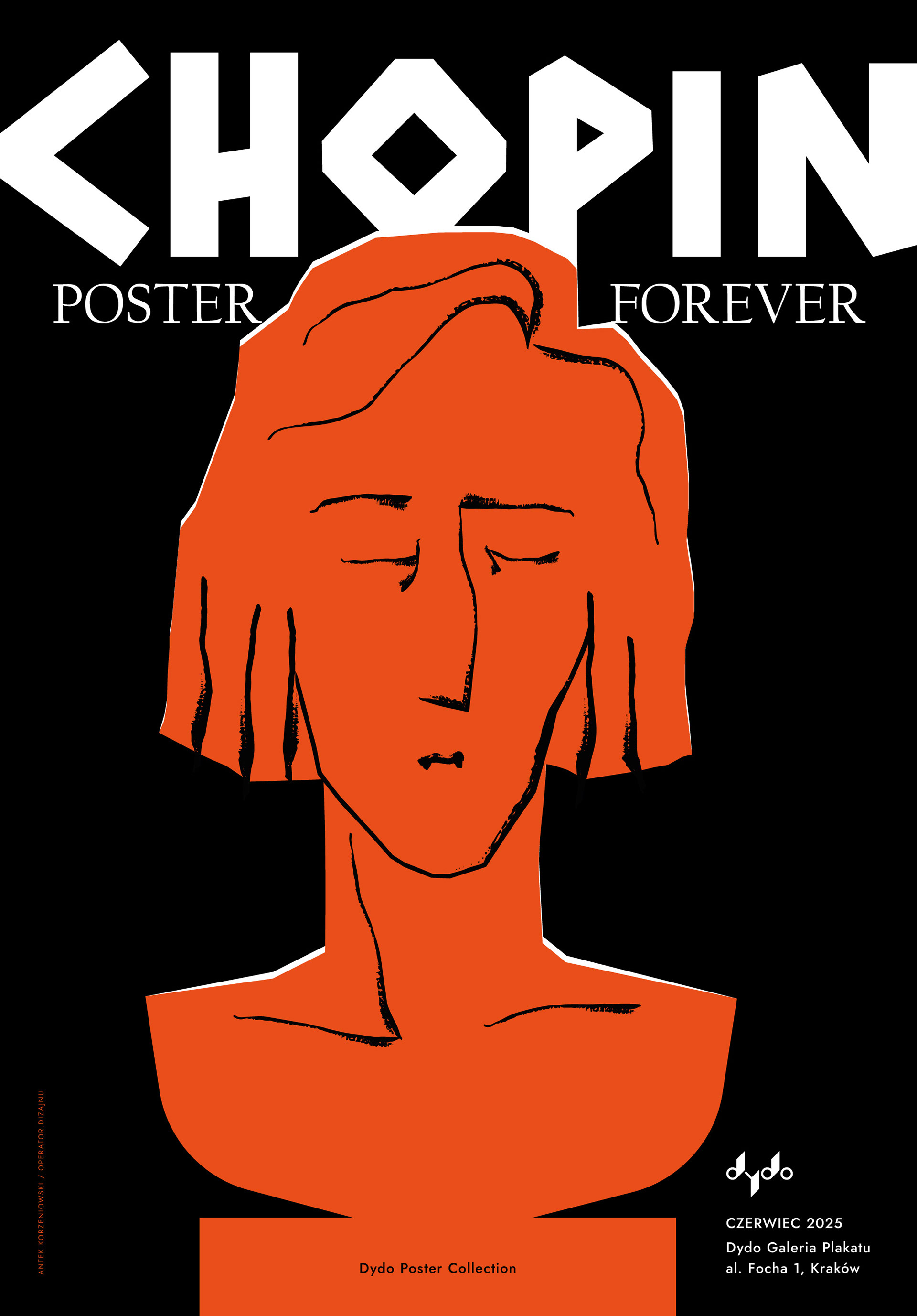
When Chopin appears on a poster, it is not his face that matters. It is the outline of a particular sensibility — romantic, introspective, unmistakably Polish. The simplified profile, reduced to a single color and a single gesture, carries more associative weight than any realistic likeness could. The viewer does not need to recognize features. They recognize meaning.
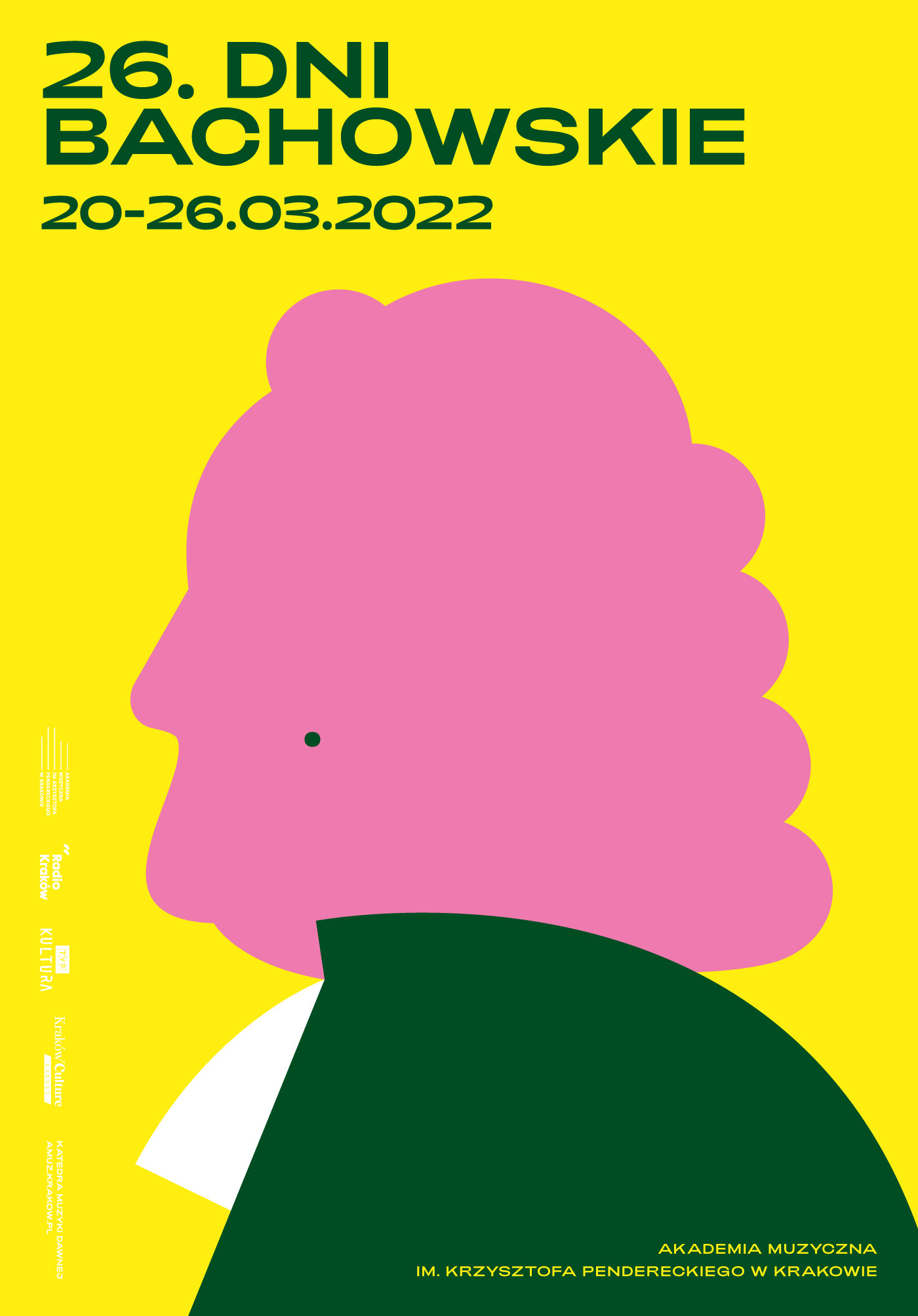
In the Bach poster, the same principle operates differently. The figure is a silhouette — pink against yellow, without a single facial detail. What remains is the wig, the collar, the era. A sign of Baroque ornament; the body as historical shorthand. In both cases, the figure works not because it resembles, but because it condenses — taking what the viewer already knows and giving it graphic form.
The Face Built from the Outside
Some figures carry no facial features at all. Their identity is constructed entirely from what surrounds them — from objects and symbols that stand in for the face itself.
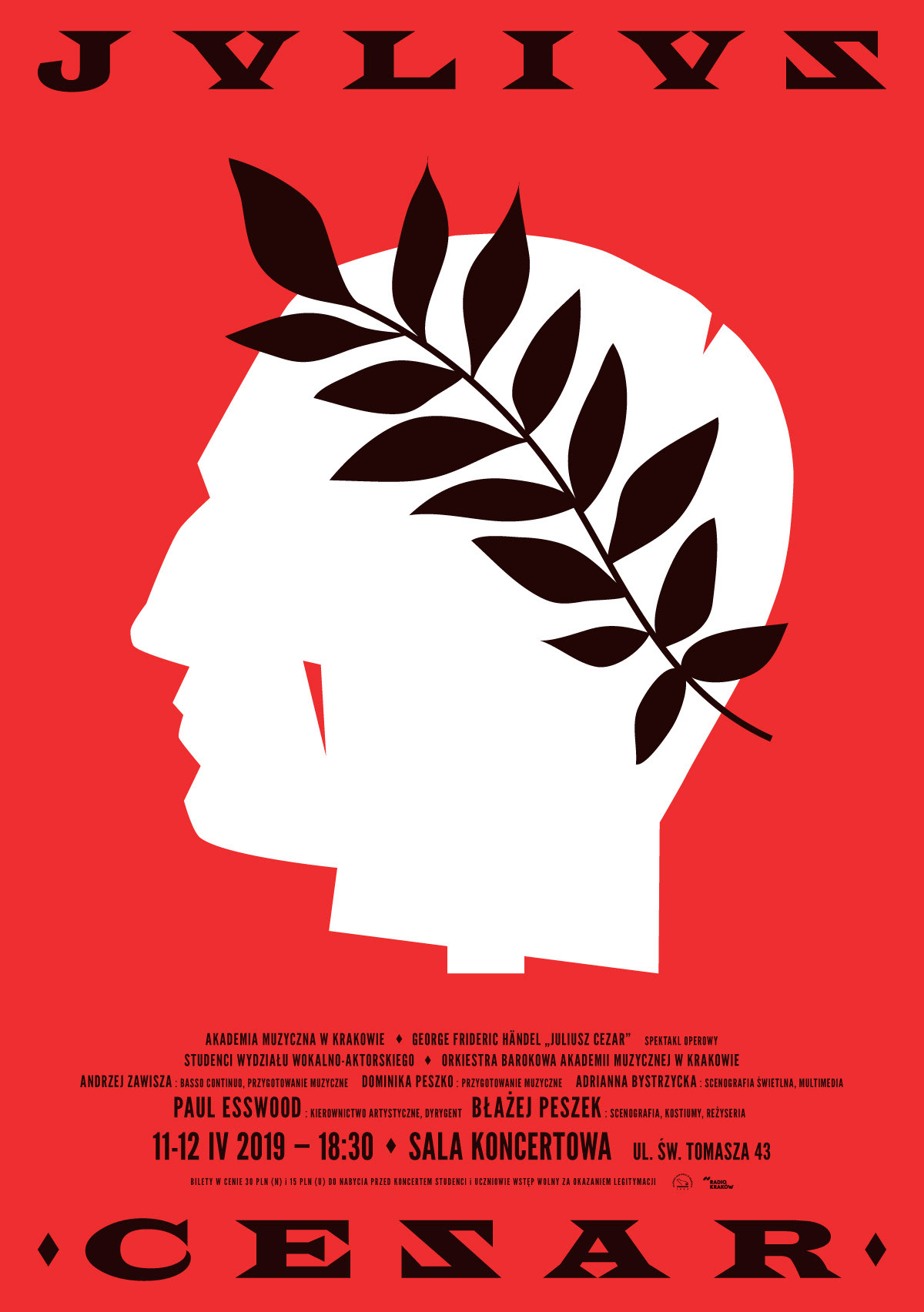
In the Julius Caesar poster, a white profile contains a laurel branch where thought should be. The wreath does not decorate the head — it defines it. Caesar is not shown as a man, but as an idea: power, antiquity, the weight of a name.
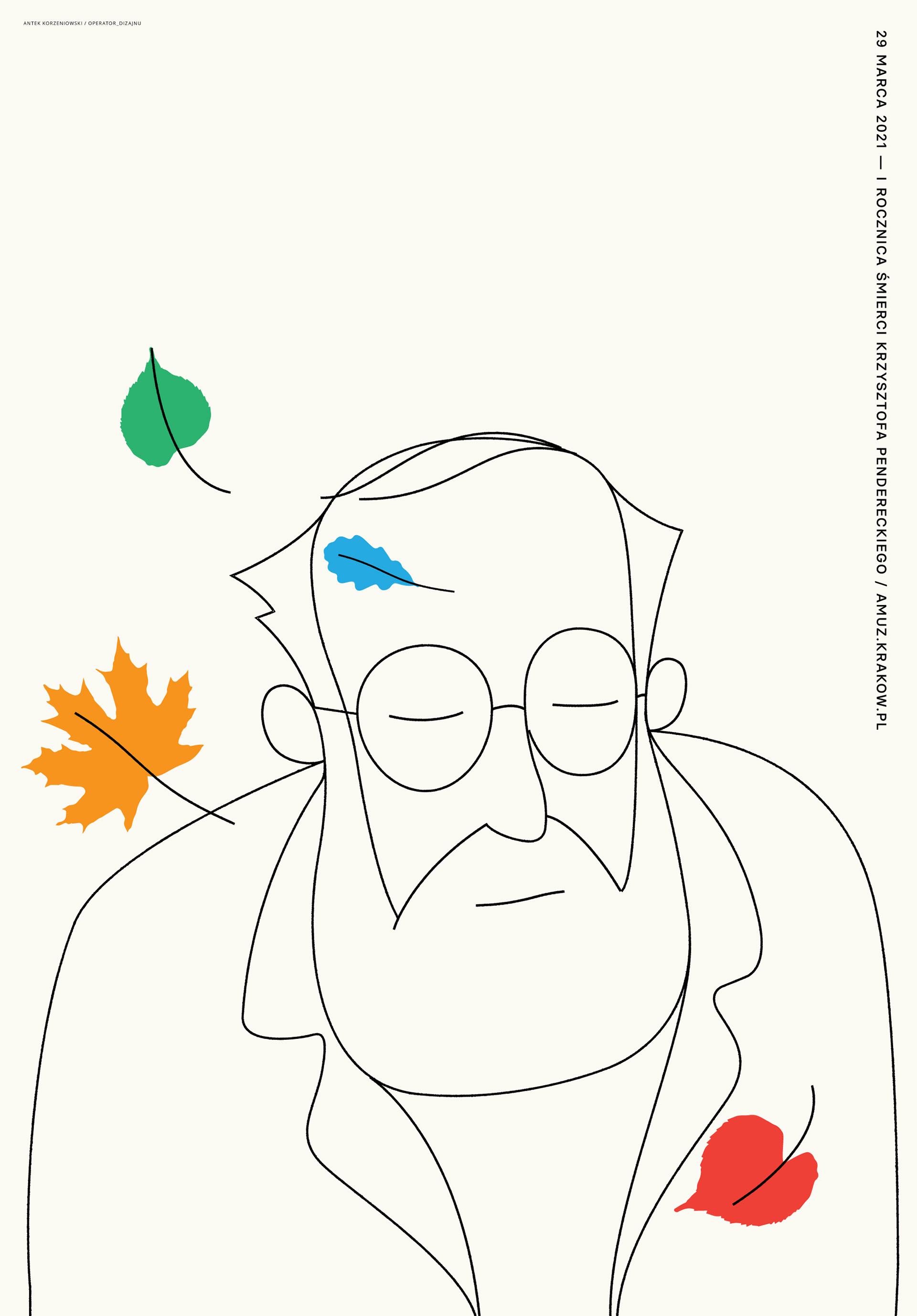
In the In Memoriam poster, a continuous line draws the face of Krzysztof Penderecki from memory — unhurried, searching. Scattered marks in four colors float around the figure, drawn from Penderecki’s own scores, where color indicated how sound should be performed. The portrait is complete not because the likeness is exact, but because it is built from his own language.
Costume as Identity
In opera, a character is inseparable from what they wear. The mask, the hat, the silhouette — these are not decorations. They are the role itself.
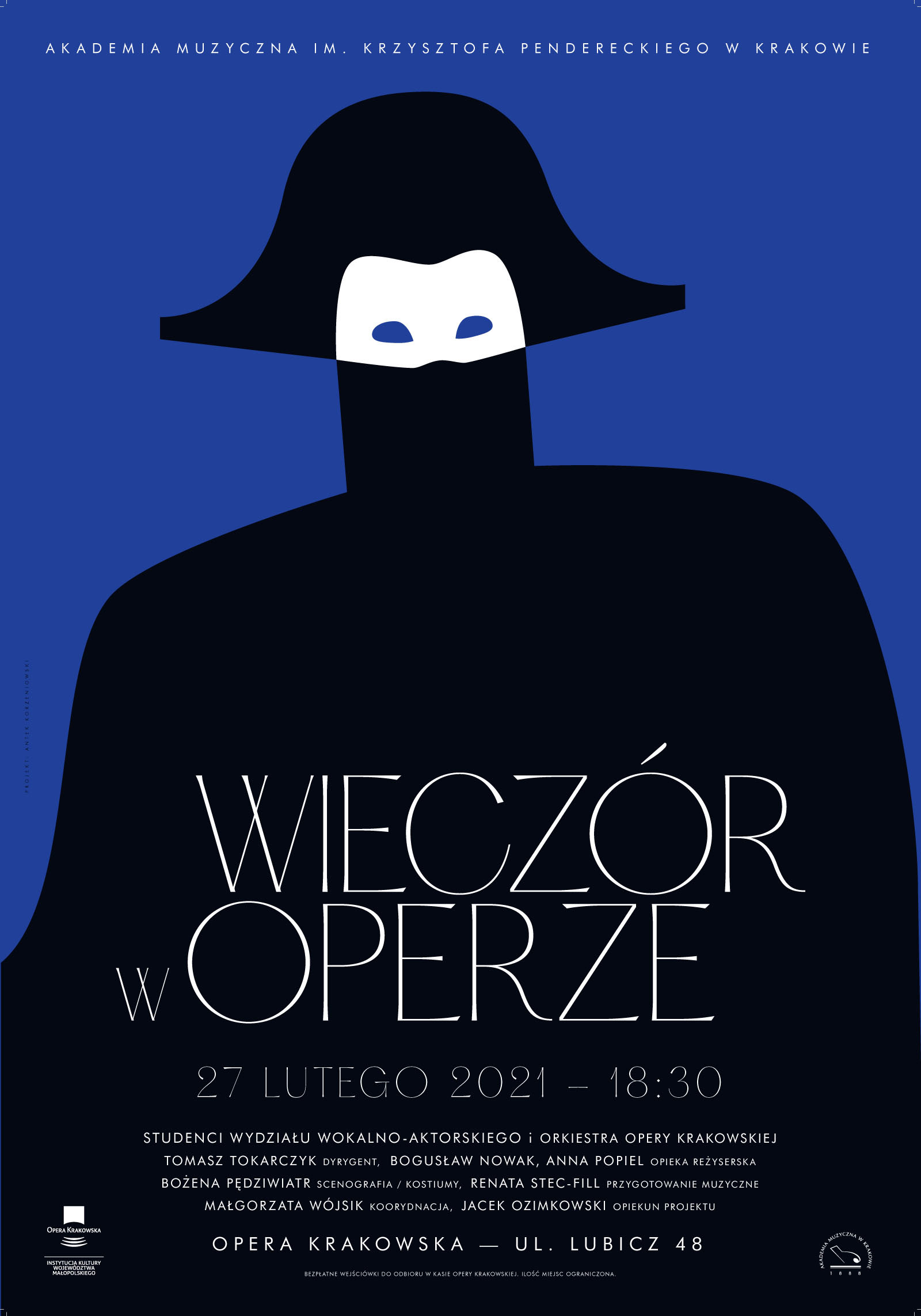
The Wieczór w Operze poster shows a figure in black, almost absorbed into the background. What remains visible is a white half-mask, two small eyes, a bicorne hat. The face is hidden, yet the character is immediately present. Mystery is not a problem to be solved, but the content of the image.
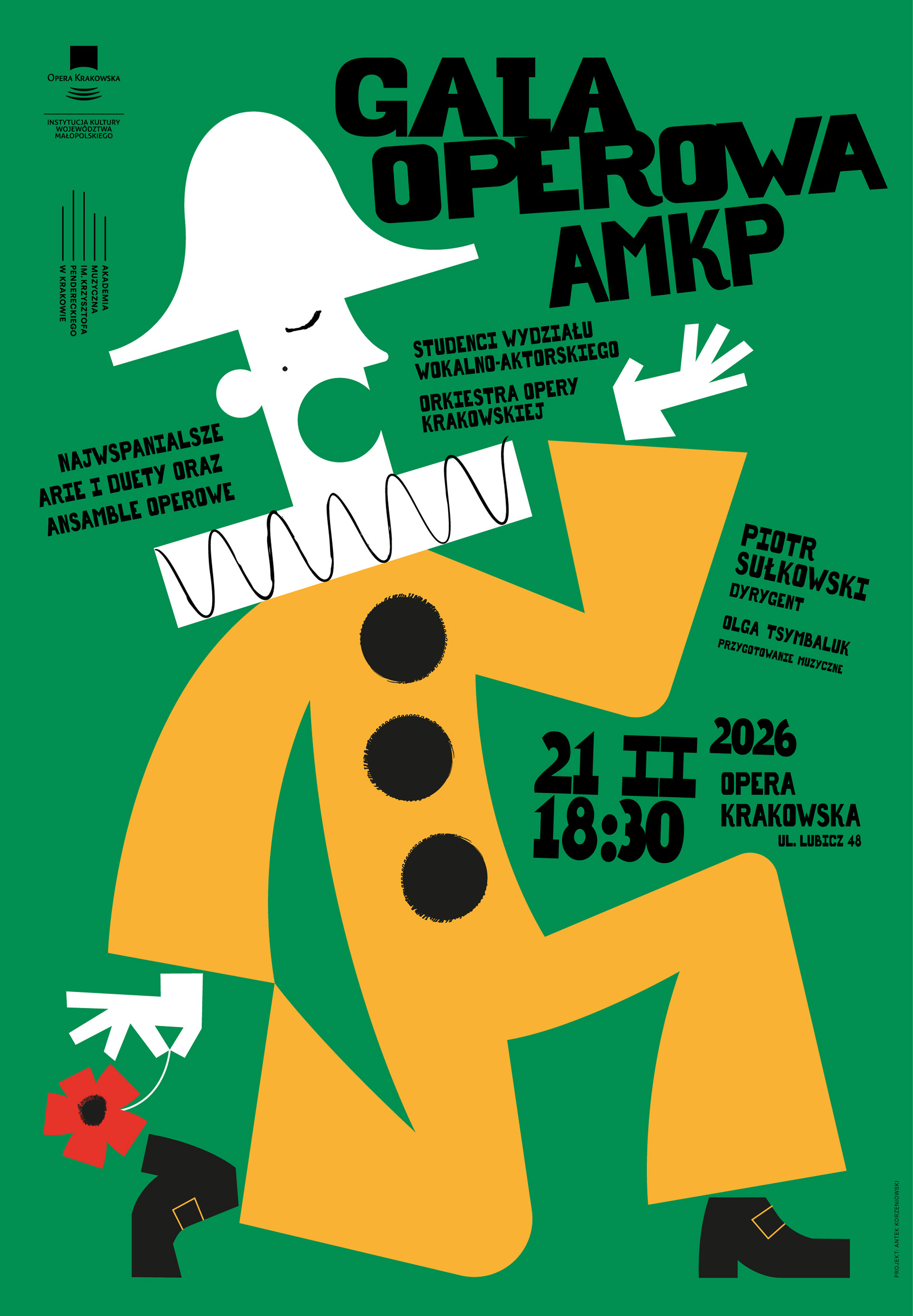
The Gala Operowa poster goes further. The figure is Pierrot — the universal fool of commedia dell’arte, rendered in flat geometric shapes, orange and black against green. He carries a flower: unmistakably theatrical, unmistakably human, unmistakably performing. The costume is not worn by the character. The costume is the character.
The Figure in Motion
Music is not static. It happens in time, in gesture, in the moment of physical effort. The most musical figures in these posters are the ones caught in the act.
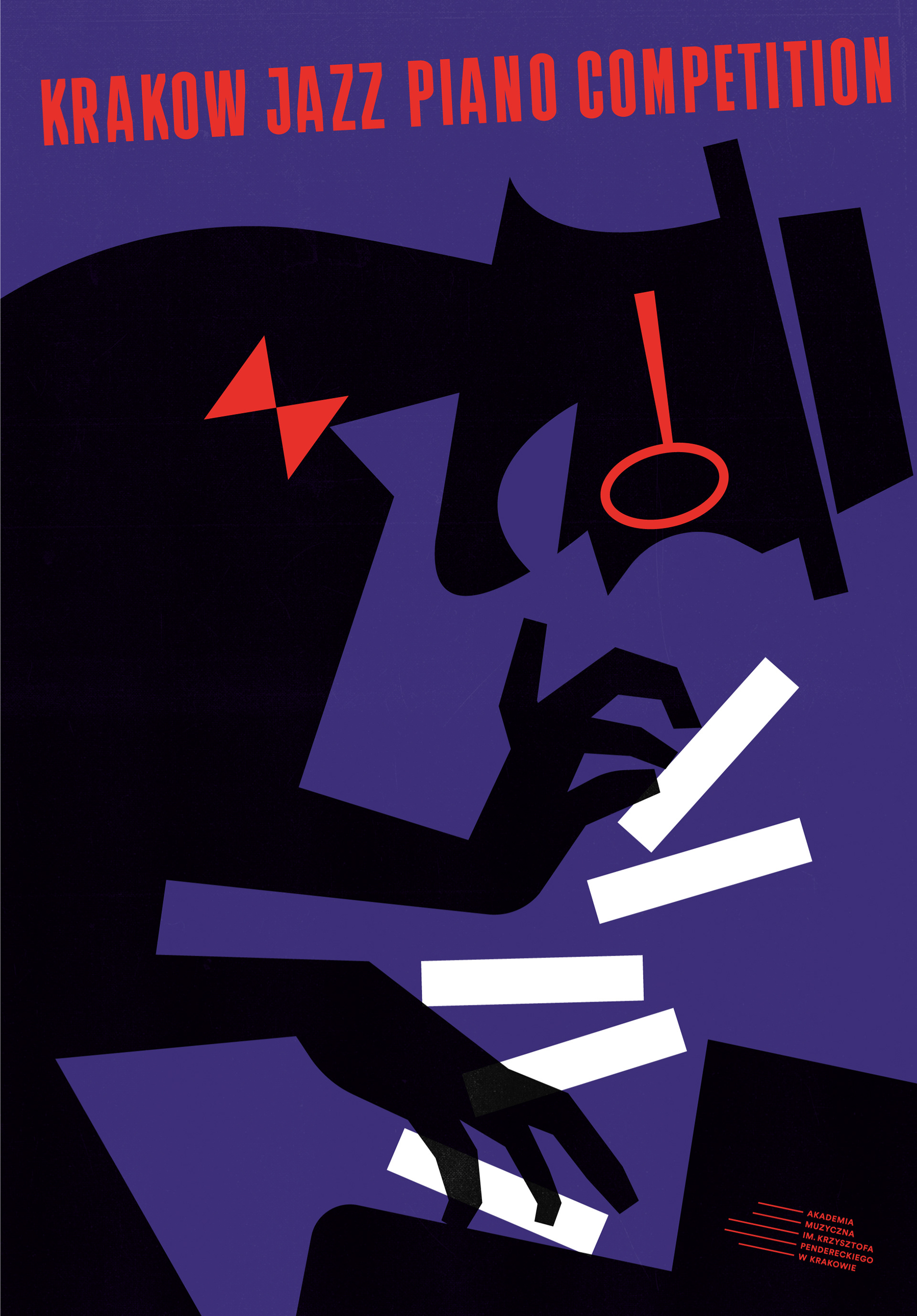
The Krakow Jazz Piano Competition poster shows a musician bent over the keyboard — head lowered, fingers extended, body dissolving into the instrument. The figure is almost abstract: a concentration of dark mass and white keys, with two red marks where eyes might be. The image does not show a pianist. It shows the act of playing.
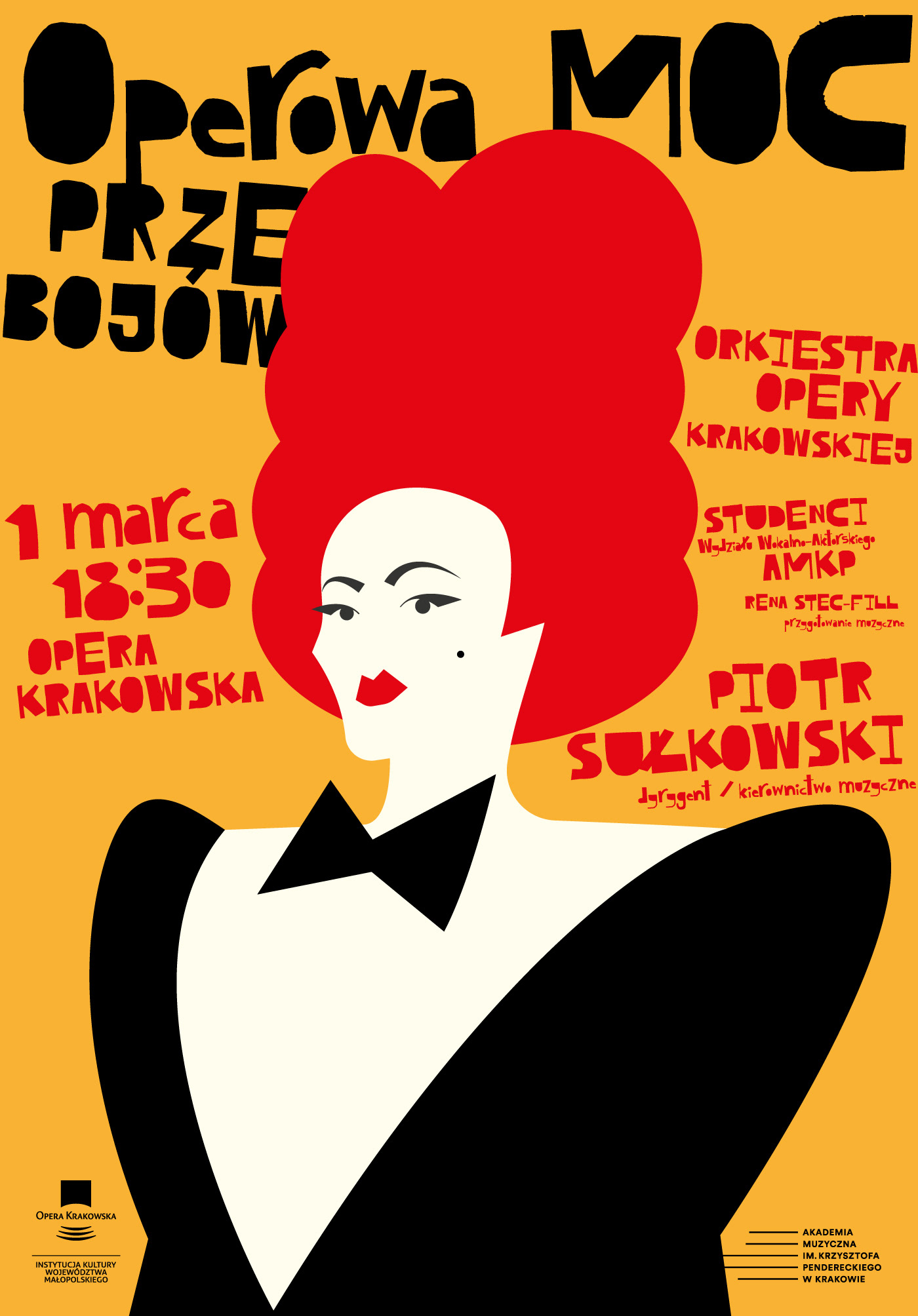
The Operowa Moc Przebojów poster takes a different register. The singer faces outward, composed and self-possessed, her red hair rising above her head like a second presence. She is not yet performing — she is about to. The energy is contained, ready to release. The figure is a held breath before the first note.
A figure in a poster does not need a face to be present. It needs posture, silhouette, gesture — something the viewer can read before reading a single word. The body knows what it means before the music begins.